
How to Reduce Cost Per Lead Without Sacrificing Lead Quality
On this page
Brands running paid campaigns in India are paying anywhere from ₹180 to ₹2,500 per lead depending on the industry, and most of them are overpaying without knowing why. Reducing cost per lead is not about cutting corners on spend. It is about being precise with every rupee you allocate. The good news: you can reduce cost per lead significantly without handing the sales team a pile of junk contacts — and a specialist lead generation agency will tell you the same.
What Is Reducing Cost Per Lead Without Sacrificing Lead Quality?
Reducing cost per lead without sacrificing lead quality means systematically lowering the average amount spent to acquire a single qualified prospect while maintaining or improving the conversion potential of those prospects. It involves a combination of precise ad targeting, landing page conversion optimisation, audience segmentation, and bidding strategy refinement. The goal is not simply a lower CPL number on a dashboard. It is a lower cost attached to a contact who is genuinely likely to buy, register, or engage in a meaningful way.
Why This Matters in 2026
Lead generation cost has climbed steadily across most paid channels. According to WordStream’s 2024 Google Ads Benchmarks, the average cost per lead on Google Ads across industries sits at $53.52 (roughly ₹4,450 at current exchange rates). For competitive sectors like finance, legal, and healthcare, that figure is considerably higher.
At the same time, marketing teams are being asked to do more with less. Boards want pipeline growth, not just impressions. That means the pressure to reduce cost per lead while keeping lead quality intact has never been greater. This is where performance marketing discipline separates teams that scale profitably from those that simply burn budget.
The Indian market adds another layer of complexity. Meta and Google both operate with different auction dynamics in India compared to Western markets. CPL on Facebook ads services in India can look attractively low (sometimes ₹80 to ₹150 for broad audiences), but those figures often hide terrible downstream conversion rates. Real CPL optimisation requires looking beyond the platform dashboard and into your CRM.
Smart Audience Targeting: The Fastest Way to Reduce Cost Per Lead
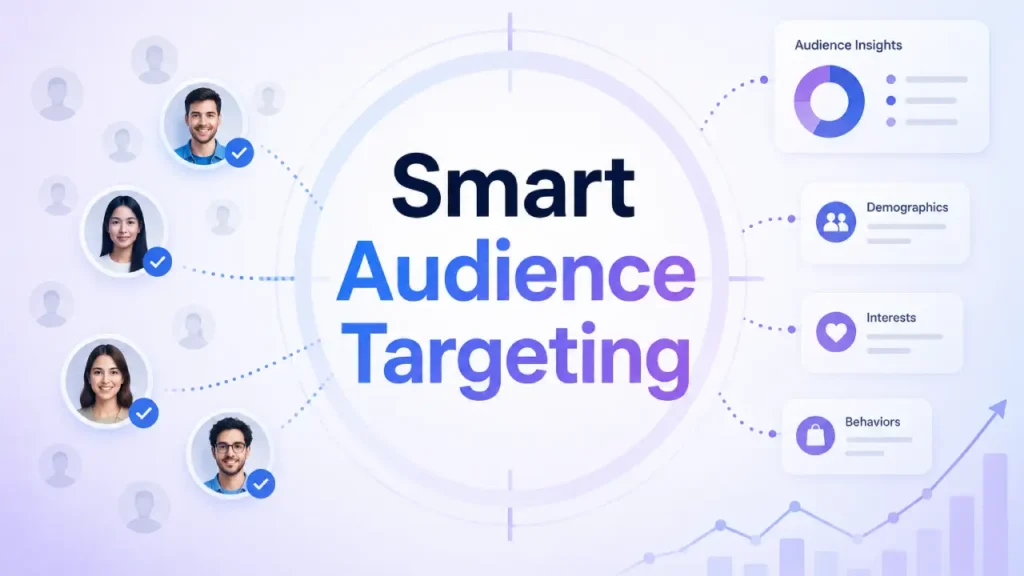
The single biggest lever most advertisers ignore when trying to reduce cost per lead is audience precision. Broad targeting is not cheap. It is expensive because it wastes impressions on people who will never convert.
When you tighten your audience, your click-through rates improve. When CTR improves, your Quality Score on Google or Relevance Score on Meta goes up. When those scores improve, you pay less per click for the same (or better) placement. This is the core mechanic behind CPL optimisation. Proper Google Ads services includes this level of audience discipline from day one.
Here is where most campaigns bleed money on ad targeting:
- Overly broad interest targeting on Meta: Running Facebook advertising to “people interested in business” when you are selling B2B SaaS is a classic mistake. Layer in job title, company size, and behavioural signals.
- No negative keyword lists on Google: If you have not built a robust negative keyword list in the first 30 days of a campaign, you are funding irrelevant clicks. Review the search terms report weekly.
- Ignoring lookalike audiences built from converters: Your best customers are the template. Upload a list of closed deals (not just form fills) and build lookalikes from that. The difference in lead quality is stark.
- Running the same creative to cold and warm audiences: Dynamic remarketing audiences already familiar with your brand convert at a fraction of the cost. Separating these into distinct ad sets lets you bid differently and reduce cost per lead on each segment separately.
- Not using audience exclusions: If someone already converted, stop paying to show them acquisition ads. Exclude existing customers and recent converters from cold campaigns.
- Skipping dayparting: In India, B2B lead generation often performs significantly better between 10am and 1pm on weekdays. Running ads 24/7 without dayparting is paying full price for low-intent traffic.
Audience work is not glamorous. It does not produce a single big win. But done consistently, it is the most reliable way to reduce cost per lead at scale.
Landing Page Conversion: Where CPL Optimisation Actually Happens
Most marketers look at ad targeting when CPL goes up. The smarter place to look is the landing page. A campaign converting at 3% versus 8% on the same traffic will show a dramatically different cost per lead, with zero change to ad spend.
Landing page conversion rate is the most underrated variable in the CPL equation. A professional landing page optimisation service will often achieve a 30 to 50 percent CPL reduction within the first 60 days simply by fixing structural conversion issues. Follow these steps to get it right:
- Match the message to the ad. If your ad says “Free SEO Audit for E-commerce Brands,” the landing page headline must say the same thing, almost word for word. Message mismatch is one of the top reasons landing pages underperform, and it silently inflates your lead generation cost.
- Remove navigation menus. Dedicated landing pages should have no escape routes. Every link that is not your CTA is a potential exit. Studies consistently show that removing navigation from landing pages improves conversion rates by 10 to 25 percent.
- Put the form above the fold. Users should not have to scroll to find the conversion action. On mobile, this is especially critical. With India having over 700 million smartphone users, optimising for mobile is not optional.
- Reduce form fields. Every additional field you add to a form reduces conversion rate. Name and phone number or name and email is often enough to qualify intent at the top of the funnel. You can ask for more information in the follow-up sequence.
- Add social proof near the CTA. A client logo row, a specific testimonial, or a case study stat placed directly above or beside your form button can lift conversions meaningfully. Specificity matters: “Helped 140+ brands reduce cost per lead by 35%” is more powerful than “Trusted by hundreds of clients.”
- Test your page speed. Google’s research shows that a one-second delay in mobile load time can reduce conversions by up to 20%. Use Google PageSpeed Insights to find and fix bottlenecks. This one change alone can reduce your cost per lead without touching a single ad. Conversion rate optimisation (CRO) is the discipline that ties all of these improvements together systematically.
Run these changes as structured A/B tests, not all at once. Platforms like Google Optimize (now integrated into GA4) and VWO work well for landing page conversion testing.
Common Mistakes That Inflate Cost Per Lead
Optimising for form fills instead of qualified leads
Platform algorithms are extremely good at finding people who will click a button. They are not good at finding people who will close. If you optimise your Facebook lead ads for volume, you will get volume. But your cost per qualified lead will be high because the platform is not trained on what matters downstream. Feed your CRM data back into Meta or Google via offline conversions and optimise for the events that actually predict revenue.
Ignoring lead quality feedback from the sales team
If sales is complaining that leads are low quality, that is a CPL optimisation problem, not just a sales problem. Get weekly feedback on which campaigns and ad sets are producing contacts that actually move forward. Kill or pause the sources producing low-quality leads. This reduces wasted spend and brings overall lead generation cost down. For B2B businesses, a dedicated B2B lead generation strategy built around quality signals from the start avoids this problem entirely.
Running campaigns without conversion tracking properly set up
You cannot reduce cost per lead if you do not know where leads are coming from. UTM parameters, GA4 goals, and platform-side conversion events all need to be verified and firing correctly before you optimise anything. Campaigns run without proper tracking are essentially guesses. An SEO audit combined with a paid account review often uncovers tracking gaps that have been silently distorting CPL data for months.
Chasing the lowest CPL without checking downstream value
A ₹200 lead from a broad audience may look better than a ₹900 lead from a tightly targeted campaign. But if the ₹200 lead never converts and the ₹900 lead closes at a high contract value, your actual cost of acquisition is lower from the expensive campaign. Always tie CPL to cost per acquisition (CPA) and customer lifetime value (LTV).
Letting winning campaigns run untouched for too long
Ad fatigue is real, particularly on Meta. Instagram advertising campaigns that performed well in week one will typically see CPL rise by week four as the algorithm exhausts the most responsive portion of your audience. Refresh creative regularly and watch frequency metrics.
Conclusion
The two highest-impact actions you can take right now are: fix your landing page conversion rate and tighten your audience targeting. These two levers, done well, can reduce cost per lead by 30 to 50 percent without requiring a single extra rupee of ad spend.
Everything else in CPL optimisation, including bidding strategy, creative testing, and lead quality feedback loops, builds on top of those foundations.
If your campaigns are generating leads but the numbers are not making commercial sense, it is worth getting a structured audit done before you scale. A fresh pair of eyes on your account structure, targeting, and conversion setup often surfaces quick wins that in-house teams miss because they are too close to the work.
Ready to reduce your cost per lead without compromising on quality? Book a free digital marketing audit with Whamply’s team and we will review your current campaigns, identify your biggest CPL leaks, and give you a prioritised action plan within 48 hours.
Frequently Asked Questions
What does “reduce cost per lead” actually mean?
Reducing cost per lead means lowering the average spend required to generate a single lead through paid or organic marketing channels. It is calculated by dividing total ad spend by the number of leads generated in a given period.
What is a good cost per lead benchmark?
It varies by industry. According to WordStream, the average CPL across industries on Google Ads is around $53. In India, benchmarks vary widely: education leads may cost ₹150 to ₹400, while financial services leads can exceed ₹2,000. Good CPL is context-dependent and should be measured against conversion rate and deal value.
How does landing page conversion affect cost per lead?
Directly. If your conversion rate doubles from 3% to 6% on the same traffic volume and spend, your CPL halves. Landing page optimisation is one of the highest-ROI actions you can take for CPL optimisation.
Can I reduce cost per lead without reducing ad spend?
Yes, Better ad targeting, improved creative, higher landing page conversion rates, and smarter bidding strategies can all reduce cost per lead without changing your total budget.
What is CPL optimisation?
CPL optimisation is the ongoing process of improving campaign performance so that each lead costs less to acquire. It includes testing audiences, ad creative, bidding strategies, and landing pages to find the most cost-efficient path to generating qualified leads.
Does reducing CPL always hurt lead quality?
Not if done correctly. Chasing the lowest CPL by broadening audiences or removing qualification steps will hurt quality. But improving conversion rates, refining ad targeting, and eliminating wasted spend can reduce CPL while maintaining or improving lead quality.
How do Facebook lead ads compare to landing page forms for CPL?
Facebook lead ads typically produce a lower cost per lead generation but often at the expense of lead quality, because the pre-filled form reduces friction for low-intent users. Landing page forms, when optimised properly, tend to produce better-qualified leads, even if CPL is initially higher.
What bidding strategy helps reduce cost per lead on Google Ads?
Target CPA bidding works well once you have 30 to 50 conversions per month and reliable conversion tracking. For newer campaigns, Maximise Conversions with a manual CPA cap can help control lead generation cost while feeding the algorithm enough data to learn.
How important is ad creative in reducing cost per lead?
Very important. Stronger creative improves CTR, which in turn improves Quality Score on Google and Relevance Score on Meta. Higher scores mean lower CPCs, which directly reduces cost per lead. Testing creative every four to six weeks is part of effective CPL optimisation.
What role does audience segmentation play in CPL optimisation?
Audience segmentation allows you to bid and message differently for cold, warm, and hot audiences. Retargeting audiences almost always have lower CPL than cold audiences. Separating them prevents budget from being wasted on generic messaging for high-intent users.
How do I track cost per lead accurately across channels?
Use UTM parameters on all ad links, verify GA4 conversion events are firing correctly, and set up offline conversion imports to pass CRM data back to Meta and Google. Without this, you are making CPL optimisation decisions based on incomplete data.
Is CPL the right metric to focus on?
CPL is useful but incomplete. Always connect it to cost per acquisition (CPA) and customer LTV. A campaign with a higher CPL but better lead quality may deliver a lower CPA and higher revenue, making it the smarter investment.
How long does it take to reduce cost per lead after making changes?
For paid campaigns, allow at least two to three weeks after any significant change before drawing conclusions. Algorithmic bidding strategies need time to adjust. Landing page changes can show results faster, often within one to two weeks if you have sufficient traffic.
What tools help with CPL optimisation?
Google Ads and Meta Ads Manager for paid channel data, GA4 for cross-channel tracking, HubSpot or Salesforce for lead quality tracking, and tools like VWO or Unbounce for landing page conversion testing. For Indian markets, also check if your CRM integrates with Exotel or Knowlarity for call tracking.
How does ad frequency affect cost per lead on Meta?
High frequency means the same users are seeing your ad multiple times. Once frequency exceeds three to four on a cold audience, CPL typically starts rising because you have saturated the most responsive segment. Rotate creative, expand audiences, or pause and re-enter after a cooling-off period.