
Digital Marketing Strategy: A Practical Guide to Growing Your Business in 2026
On this page
Most business owners already know they should be doing digital marketing. The harder question is how to do it in a way that actually brings in customers instead of quietly draining the budget every month. The answer is not another random tactic or a trending app. It is a clear digital marketing strategy that ties every channel together and points it all at the same goal: more qualified leads and more revenue.
In this guide we will walk through what a digital marketing strategy really is, the core channels that make it work, and how to turn all of that traffic into paying customers. Whether you run a local shop or a growing brand, the same principles apply. Let us break it down in plain language.
What a Digital Marketing Strategy Actually Is
A digital marketing strategy is simply your plan for reaching the right people online and convincing them to choose you. It covers where you show up, what you say, and how you measure whether it is working. Without a strategy, most companies end up doing a little bit of everything, posting on social media one week, running a few ads the next, then wondering why nothing sticks.
Good online marketing is not about being everywhere at once. It is about being in the right places consistently, with a message that matches what your audience is searching for. When your SEO, paid ads, content, and email all reinforce the same story, every channel makes the others stronger. That compounding effect is the whole point of having a strategy in the first place.
Start With Your Audience and Goals
Before you spend a single rupee on ads or write a single blog post, get clear on two things: who you are trying to reach and what you want them to do. Your target audience shapes every decision that follows. A B2B software company and a neighbourhood dental clinic need very different digital marketing strategies, even if they use some of the same tools.
Set goals you can actually measure. “More brand awareness” is vague. “Fifty qualified enquiries a month from organic search” is something you can track and improve. Once you know your audience and your numbers, choosing the right marketing channels becomes much easier, because you are matching each channel to a clear job.
The Core Channels of a Modern Digital Marketing Strategy
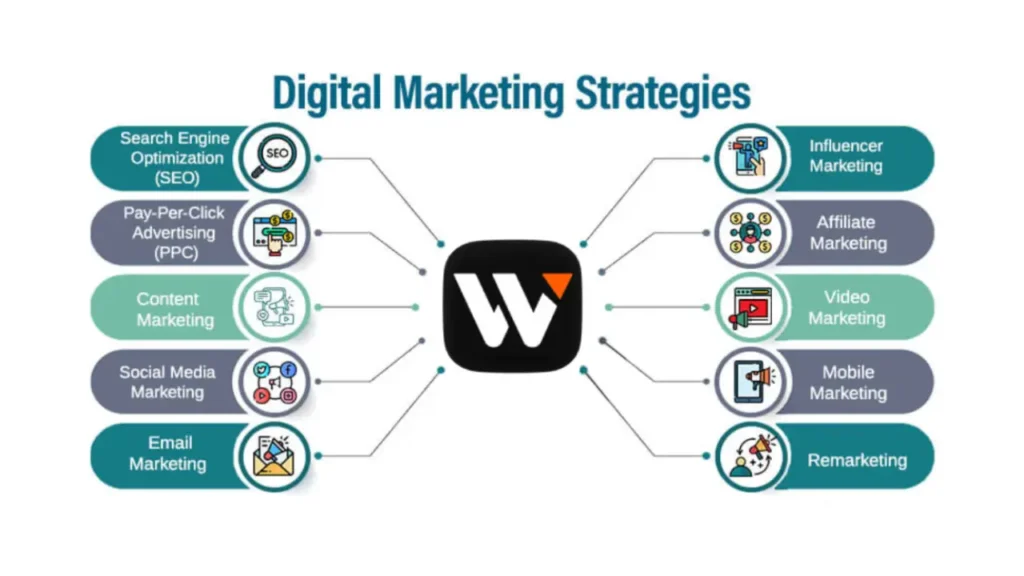
There is no single best channel that works for everyone. The strongest results come from combining a few of them so they support each other. Here are the channels that form the backbone of almost every successful digital marketing plan.
Search Engine Optimization
When someone types a problem into Google, you want your business to be the answer they find. That is what search engine optimization does. It is the slow but reliable engine of digital marketing, because the traffic it brings is free, intent-driven, and compounds over time. People searching for a solution are usually ready to act, which makes organic traffic some of the highest quality you can get.
SEO has a few moving parts. If you serve customers in a specific city or area, local SEO helps you show up in map results and “near me” searches, which is huge for service businesses. Behind the scenes, technical SEO makes sure your site loads fast and is easy for Google to crawl, while building quality backlinks from trusted websites tells search engines that your brand is credible. Get these working together and your rankings climb steadily. If you are not sure where your site stands today, a free SEO audit is a smart first step before you invest in anything else.
Paid Advertising and Performance Marketing
SEO builds momentum over months. Paid advertising gives you visibility today. With performance marketing, every rupee is tied to a measurable outcome, whether that is a click, a lead, or a sale. This is what lets you scale predictably once you know your numbers work.
The two giants here are search and social. Google Ads puts you in front of people at the exact moment they are searching for what you sell, which makes it one of the highest-intent channels in all of digital marketing. Facebook and Instagram ads work differently, reaching people based on their interests and behaviour, which is perfect for building demand and retargeting visitors who did not convert the first time. The real magic happens when you pair paid traffic with conversion rate optimisation, so that more of the visitors you pay for actually turn into customers instead of bouncing off a clunky landing page.
Social Media Marketing
Social media is where your brand builds a personality and stays top of mind. Consistent social media marketing keeps you visible between purchases and gives people a reason to trust you before they ever reach out. It is less about going viral and more about showing up regularly with content your audience genuinely finds useful.
For brands that want to borrow trust quickly, influencer marketing puts your product in front of an audience that already listens to someone they respect. And if your story is better told through video, YouTube marketing gives you a long shelf life, since a good video can keep pulling in views and leads for years. Each of these social channels feeds the others, which is exactly how a connected digital marketing strategy is supposed to work.
Content Marketing
Content is the fuel that powers nearly every other channel. Your SEO needs pages to rank, your social posts need something to share, and your email list needs something worth sending. Strong content marketing answers your customers’ real questions, builds authority in your space, and gently guides readers toward becoming buyers. This is also the article you are reading right now, which is content marketing doing its job.
The trick is to write for people first and search engines second. When you genuinely help your audience solve a problem, the rankings, shares, and conversions tend to follow naturally.
Email Marketing
Every other channel is rented. Your email list is owned. That is why email marketing still delivers some of the best returns in all of digital marketing, often outperforming flashier channels on pure ROI. A simple welcome sequence, a regular newsletter, and a few automated follow-ups can keep your audience engaged and bring people back to buy again and again.
Email also works quietly in the background. Once your automations are set up, they nurture leads around the clock without any extra effort from you, which makes email one of the most efficient tools in your entire marketing stack.
Your Website: The Hub of Everything
Here is something a lot of businesses miss. Every channel above sends traffic somewhere, and that somewhere is almost always your website. If your site is slow, confusing, or hard to use on a phone, you lose the customer no matter how good your ads or SEO are. A fast, well-built site is the foundation the whole strategy stands on.
Investing in proper website design and development is not a vanity project. It is a conversion decision. A clean, quick, mobile-friendly website turns more of your hard-won traffic into enquiries, which improves the results of every other channel at once.
Do Not Forget Brand and Reputation
People buy from companies they trust, and trust is built long before the sale. Your visual identity, your tone, and the way you present yourself all shape that first impression. Thoughtful branding and creative work makes your business look established and memorable, which lowers the resistance to buying across every channel.
Trust also lives in your reviews. Before choosing you, most people will check what others have said. Active online reputation management helps you earn positive reviews, respond to feedback, and protect the image you have worked hard to build. A strong reputation makes your ads convert better and your sales calls easier, so it quietly lifts the performance of your whole digital marketing strategy.
How AI Is Changing Digital Marketing
You cannot talk about digital marketing in 2026 without talking about AI. From smarter ad targeting to content creation and automated customer support, artificial intelligence is making campaigns faster to run and easier to scale. Used well, AI-powered marketing frees up your team from repetitive work so they can focus on strategy and creativity, the things machines still cannot do well.
The businesses pulling ahead are not the ones using AI to replace marketing. They are the ones using it to do more of what already works, with less waste. Treat AI as a force multiplier for your existing channels rather than a shiny object, and it becomes a serious competitive edge.
Turning Clicks Into Customers
Traffic is not the goal. Customers are. This is the step most companies underinvest in, and it is exactly where a focused approach to lead generation pays off. Every visitor your channels bring in should have a clear, low-friction path to become a lead, whether that is a quote form, a phone call, a chat, or a download.
Small details make a big difference here. The wording of a button, the length of a form, the speed of a follow-up, all of these decide whether a curious visitor turns into a real enquiry. When your lead generation and conversion process is tight, you get more customers from the same amount of traffic, which is the cheapest growth there is.
Measuring What Matters
A digital marketing strategy without measurement is just guessing with a budget. Decide upfront which numbers actually matter for your business, then track them honestly. For most companies that means cost per lead, conversion rate, customer acquisition cost, and return on ad spend, not vanity metrics like follower counts.
The point of tracking is not to admire the dashboard. It is to learn what is working so you can do more of it and cut what is not. Review your numbers monthly, double down on the channels delivering real ROI, and keep refining. Marketing that improves a little every month beats a big campaign that fizzles out.
Putting It All Together
A great digital marketing strategy is not about chasing every new trend. It is about choosing the right channels for your audience, connecting them so they reinforce each other, and measuring results so you keep getting better. SEO brings in intent. Paid ads bring speed. Social and content build trust. Email and lead generation close the loop. Your website ties it all together, and your brand makes people want to choose you in the first place.
You do not have to launch all of this at once. Start with one or two channels that fit your goals, get them working, then expand. The businesses that win online are rarely the ones with the biggest budgets. They are the ones with a clear plan and the patience to execute it.
If you would like a second pair of eyes on your current setup, our team can help you map out a digital marketing strategy built around your specific goals. Talk to our team and we will show you exactly where the biggest opportunities are.